The Art of
Tasseography
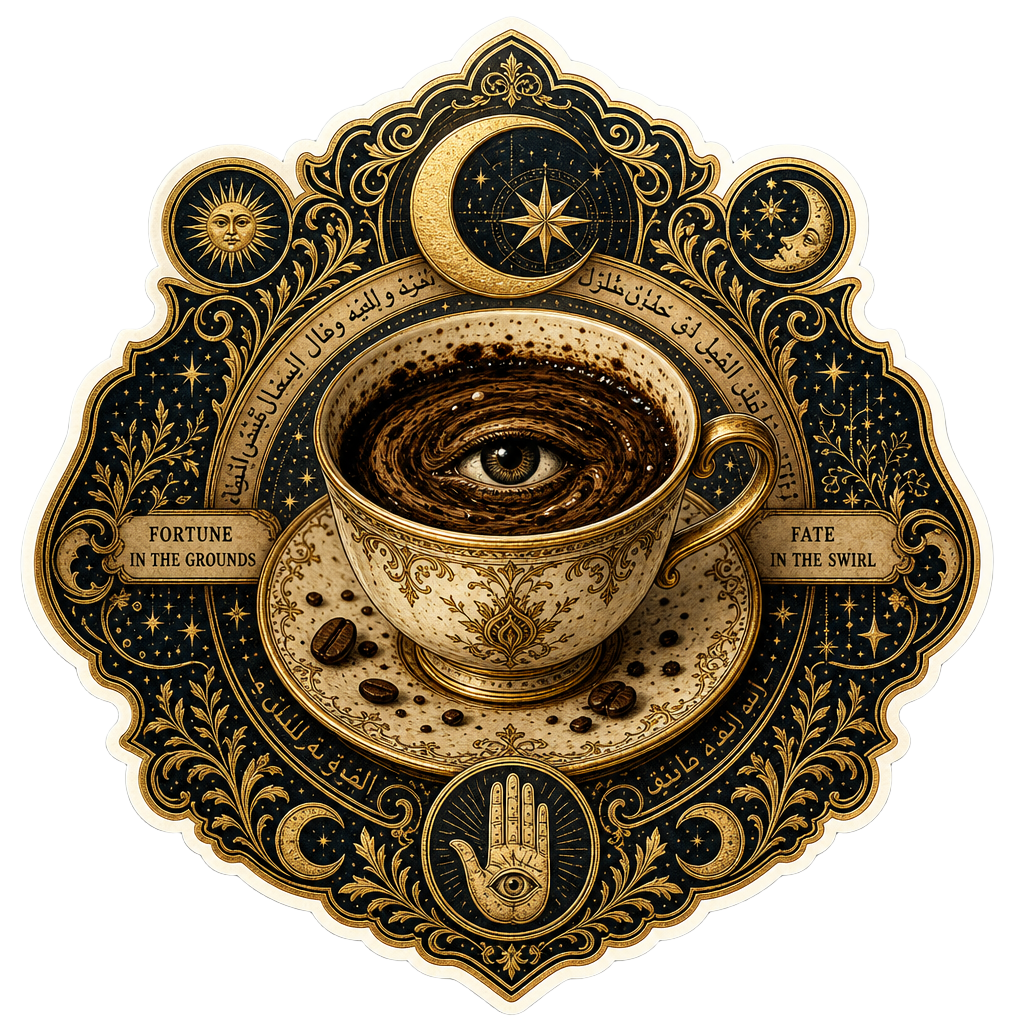
The divinatory art of interpreting the patterns left by coffee grounds, tea leaves, or wine sediments in the bottom of a cup. Practiced for over five hundred years across Turkey, Greece, Ireland, and the Middle East.
What is Tasseography?
Tasseography is the ancient art of divination through the interpretation of patterns left by coffee grounds and tea leaves. It treats the cup as a small landscape where symbols surface once the drink is gone, and where a careful reader can trace the shape of what is coming.
Etymology
The word combines the French tasse, meaning cup, with the Greek suffix graphy, meaning writing. An equivalent term, tasseomancy, uses the Greek mancy for divination. Both name the same practice: reading meaning from what settles in a cup.
A Brief History
The oldest continuous tradition comes from the Ottoman Empire, where thick unfiltered Turkish coffee leaves generous grounds. Tea leaf reading rose in parallel in seventeenth-century Britain and Ireland, with its own symbol dictionary and a step by step method. Roma communities carried both across Europe. Today it is a serious ritual in Istanbul, Athens, Beirut, and Cairo.
The Sacred Ritual
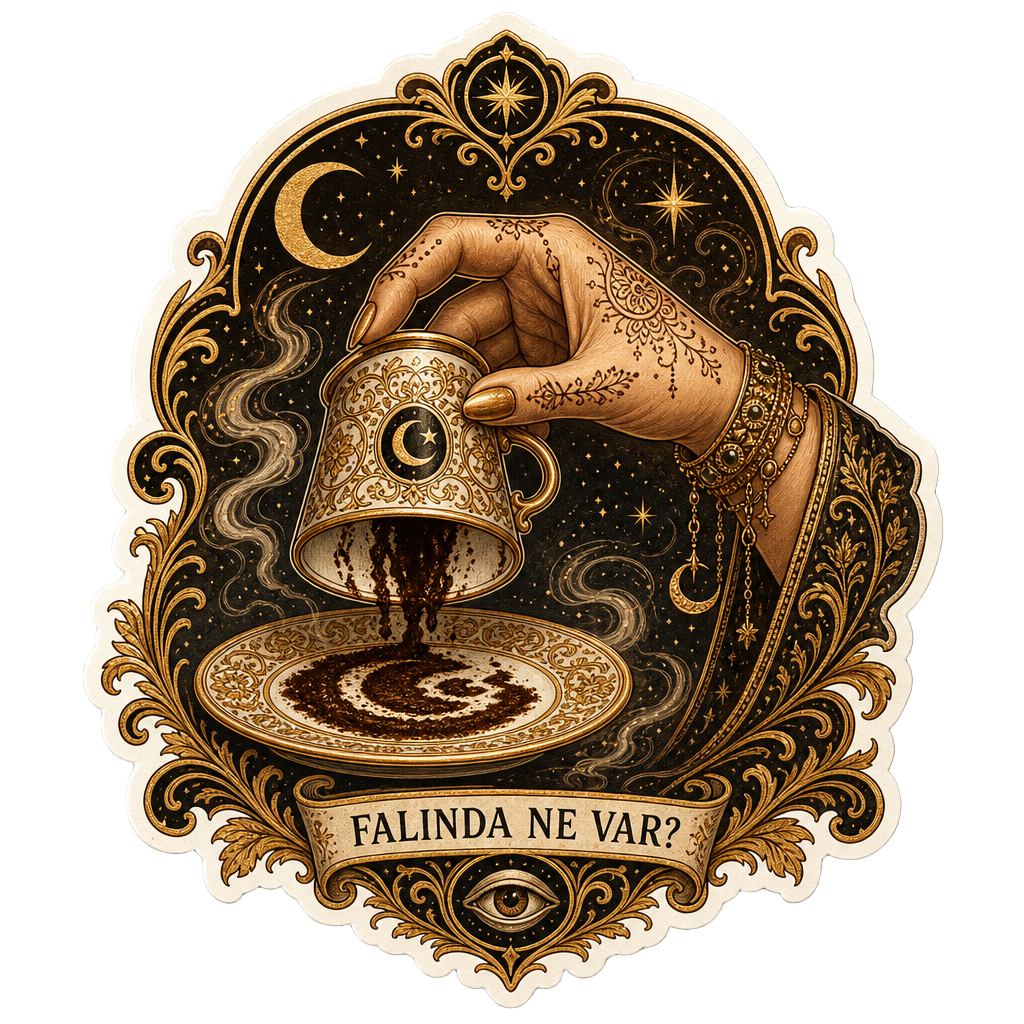
- 01.The querent drinks the coffee slowly, holding a question in mind.
- 02.A small amount of liquid is left, then the cup is turned upside down on the saucer.
- 03.After a few minutes the reader lifts the cup and studies the shapes on the inner walls.
- 04.The cup is divided into zones: the rim for the near future, the middle for coming weeks, the bottom for deeper truths.
- 05.Symbols are named and combined into a narrative. A heart near an arrow means something different than a heart near a snake.
Is it real?
Tasseography does not claim laboratory-verified predictions. It works the way tarot and the I Ching work: as a mirror for pattern-recognition and reflection. The symbols are old enough and specific enough that a careful reading almost always surfaces something the querent already half knew but had not yet said out loud.
Reading your own cup with AI
Coffee Oracle applies the same symbolic framework used by traditional readers, tuned to your birth date, life path number, and current mood. Take a photo and within seconds the Oracle names the symbols in your cup, reads their positions, and returns a personalized narrative. See the full coffee cup symbol dictionary to explore each shape in depth.